




Somatic Healing Therapy: Techniques, Evidence and Who May Benefit
What if the body’s signals could help you understand what words alone haven’t been able to reach? Somatic healing therapy uses awareness of physical sensations to explore thoughts, emotions, and memories, with the aim of supporting trauma processing without requiring you to relive painful experiences. It brings attention to the connection between bodily responses and emotional wellbeing.
If stress or difficult experiences show up as tension, unsettled feelings, or disconnection, it’s understandable to wonder whether somatic healing therapy might help. Somatic therapy is not a single technique, and its research base is still developing. This guide explains what sessions may involve, how grounding and breathwork are used, what the evidence can and can’t tell us, and who may find this approach helpful. You’ll also learn when another kind of support may be more appropriate, so you can consider your options with care and a clearer sense of what to expect.
Table of Contents
What is somatic therapy?
Somatic therapy begins with physical sensations, helping a person notice how emotions, memories, and stress show up in the body. Anxiety, for example, may involve tight shoulders, a clenched jaw, or labored breathing. With a practitioner’s support, a person can explore these responses at a manageable pace. Somatic healing therapy focuses on processing trauma without requiring someone to relive painful events.
People may explore this approach for trauma and post-trauma stress, including symptoms associated with post-traumatic stress disorder (PTSD). Other concerns may include anxiety, panic attacks, chronic stress, depression, complicated grief, and low self-esteem. Some people also seek support with addiction, intimacy or trust issues, and sexual function. These are possible areas of support, not a promise that this approach suits every concern.
Somatic work may also explore physical experiences such as chronic pain, muscle tension, or digestive disorders. A person might notice stress coinciding with stiffness or discomfort during daily activities. The therapy brings attention to the mind-body connection through sensations, movement, and verbal exploration. In broader wellness settings, holistic approaches like Face Up utilize somatic bodywork to help release stress and physical tension, while clinical methods like Somatic Experiencing, developed by Peter Levine, focus specifically on trauma’s physiological effects.
How does somatic therapy compare with CBT, EMDR, and talk therapy? Somatic therapy emphasizes body awareness alongside emotional exploration, while CBT, EMDR, and talk therapy use different methods and may focus on other aspects of a person’s experience. Somatic practices can also be integrated with psychotherapy and counseling approaches, including CBT.
How much does somatic therapy cost in the United States, and is it covered by insurance? Costs vary depending on factors such as the practitioner, setting, and session format. Insurance coverage also varies and may be more likely with extreme mental-trauma symptoms, such as seizures. Before choosing an approach, consider how the concern affects daily life and whether body-focused work feels appropriate to discuss with a qualified mental health professional.
Scientific evidence and research limitations
Research on somatic approaches suggests possible benefits, but the evidence base remains smaller than that for cognitive behavioral therapy (CBT). A systematic review found that most included studies reported an association between somatic therapeutic approaches and improved post-traumatic stress disorder (PTSD) symptoms. This pattern is encouraging, but it doesn’t establish that every method works equally well or for everyone.
One study reported that 44.1% of participants no longer met the criteria for a PTSD diagnosis after treatment. It also found large effect sizes, defined as Cohen’s d greater than 0.8, for PTSD and depression symptoms. Those results describe that study’s participants, not a guaranteed outcome for someone considering therapy. A 2021 review summarized Somatic Experiencing studies in which participants attended between one and 15 sessions, a wide range that illustrates differences in treatment and research design.
Other findings are preliminary. A pilot study combining mindfulness with body awareness reported reduced anxiety and depression symptoms after eight weeks. The first small randomized controlled trial of somatic therapy occurred in 2017. Small or early studies can offer useful clues, yet they can’t settle questions about long-term effects, which techniques help most, or how somatic methods compare directly with established treatments. Evidence is also uneven across approaches and concerns.
Training also warrants careful consideration. Somatic therapy has no official accreditation, so training can vary. To find a qualified therapist, look for a licensed professional with training in somatic techniques and, ideally, experience in trauma-informed care. Ask how the method supports pacing, body awareness, and emotional safety during sessions.
When considering the evidence, note what a study actually measured: PTSD diagnosis, depression symptoms, or another outcome. These measures aren’t interchangeable. Somatic methods may complement approaches such as CBT, dialectical behavior therapy, or acceptance and commitment therapy rather than replace them. This distinction helps put research findings in perspective as you consider support suited to your needs.
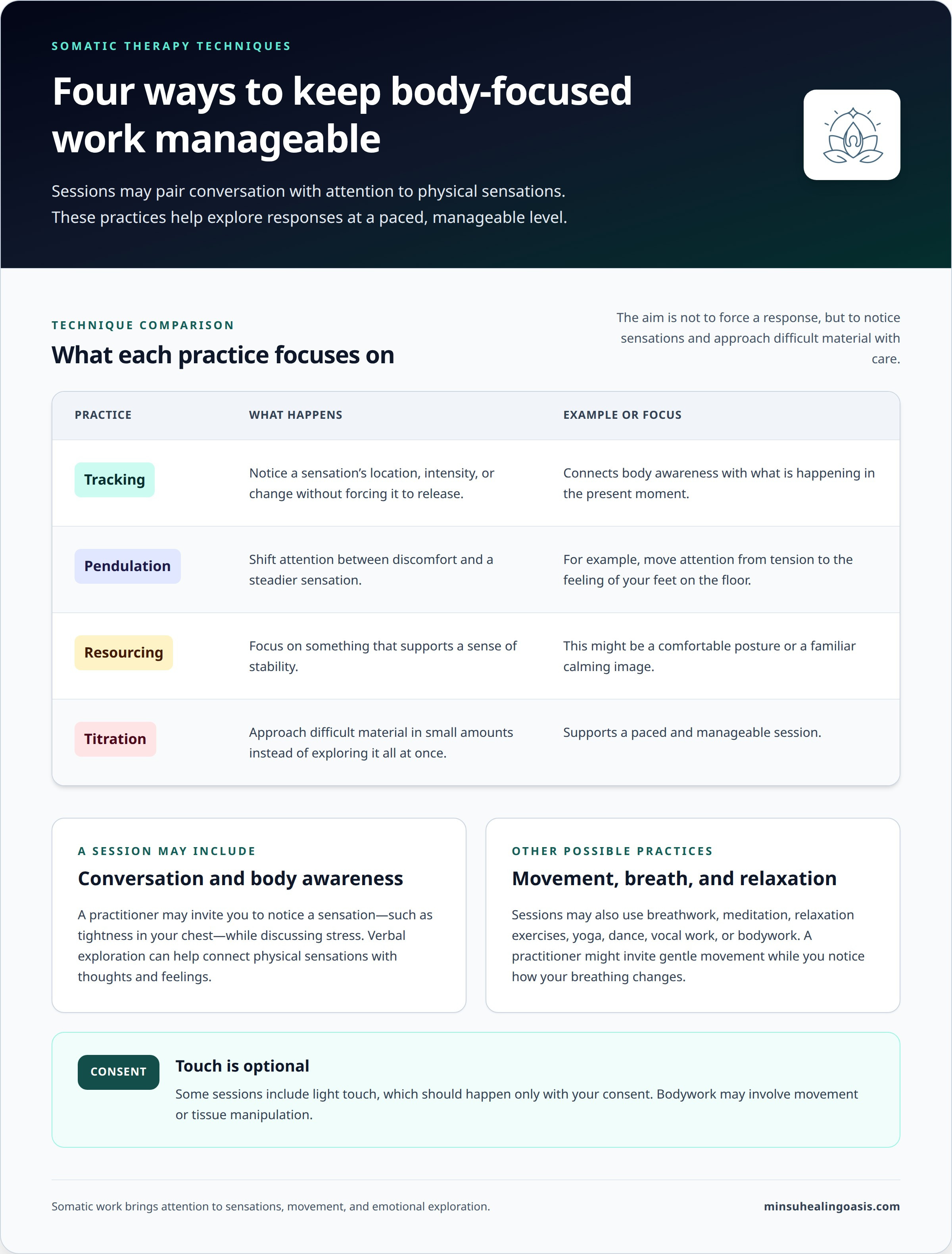
Somatic therapy techniques: pendulation, resourcing, titration, and tracking
Somatic sessions often pair conversation with attention to the body’s responses. A practitioner may invite you to notice a sensation, such as tightness in your chest, while discussing stress. Tracking means observing qualities such as location, intensity, or change without forcing release. This practice connects body awareness with what’s happening in the present moment.
Pendulation shifts attention between discomfort and a steadier sensation, such as moving from tension to the feeling of your feet on the floor. Resourcing means focusing on something that supports a sense of stability, perhaps a comfortable posture or a familiar calming image. Titration approaches difficult material in small amounts rather than exploring it all at once. Together, these methods aim to keep sessions paced and manageable.
Other techniques may include breathwork, meditation, relaxation exercises, yoga, dance, vocal work, or bodywork. For example, a practitioner might invite gentle movement while you notice how your breathing changes. Some sessions include light touch, which should happen only with your consent. Bodywork may involve movement or tissue manipulation, while verbal exploration can help connect physical sensations with thoughts and feelings. Outside of clinical therapy, specialized bodywork and wellness practices like Body 'N' Balance also emphasize physical relaxation and touch therapies to help release tension.
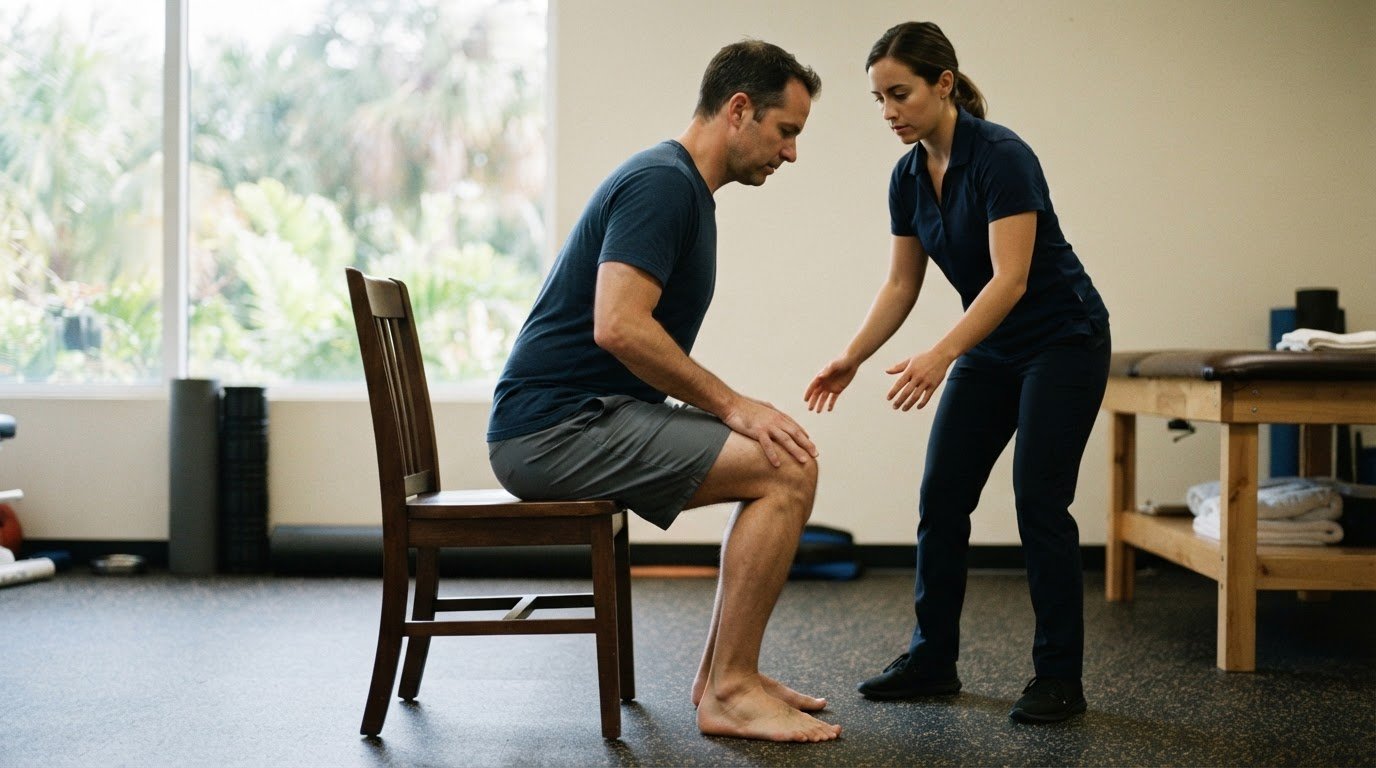
The Alexander Technique is a movement education method that draws attention to posture and habitual movement. It can be considered alongside somatic approaches, though it isn’t the same as trauma-focused psychotherapy. In a session, a practitioner may guide someone to notice how they hold tension while sitting, standing, or moving. Somatic Experiencing, by contrast, focuses on physiological aspects of trauma. These examples show how body-oriented methods can differ in focus, even when awareness and movement are central.
Who may benefit from somatic therapy
Somatic therapy may suit people who notice emotional distress alongside physical responses. Anxiety, for example, can involve persistent muscle tension, shallow breathing, or difficulty settling after stress. Body-focused attention allows these patterns to be noticed alongside thoughts and feelings. You don’t need a particular diagnosis to discuss whether this approach fits your goals.
People living with trauma or post-traumatic stress symptoms may value a paced approach that includes body awareness. Others may consider it for panic attacks, chronic stress, depression, complicated grief, or low self-esteem. It may also support exploration of chronic pain, muscle tension, trust concerns, or intimacy difficulties. These concerns affect daily life in different ways, so therapy’s focus depends on what the person hopes to address.
Body psychotherapy may appeal to someone who finds it hard to describe emotions in words or wants mindfulness and movement included in therapy. A person might begin by noticing shoulder tension while discussing a stressful situation. A trained practitioner can help keep attention on manageable sensations and adjust the pace as needed. Any touch should happen only with the person’s consent.
Somatic work isn’t suitable for everyone at every moment. Severe dissociation, untreated psychosis, or active substance use that affects awareness may make body-focused work difficult. A mental health professional may recommend other therapies first. The person’s ability to stay present, recognize sensations, and communicate distress matters when considering this approach.
A useful starting point is to identify the concern, such as trauma-related distress or ongoing tension, and discuss how body-focused work could fit alongside other support. Somatic practices can complement therapies such as CBT, dialectical behavior therapy, or acceptance and commitment therapy. For a grounded conversation about physical tension and body-focused care, explore support for your wellbeing.
Minsu’s Healing Oasis
Minsu’s Healing Oasis offers hands-on and holistic options for people exploring how physical wellbeing and emotional stress may connect. Physiotherapy and Manual Therapy can support physical concerns, while Myofascial release addresses tissue-focused care. Energy Healing and Alternative Therapies, including Quantum Healing Technique, offer additional approaches for those seeking a broader wellness perspective.
These services are not psychotherapy or a substitute for mental health care. They may be relevant if you’re also seeking support for physical tension or recovery as part of your wellbeing. The right next step depends on the concerns you want to address and the kind of care you’re seeking.
For a conversation about your needs, contact Minsu’s Healing Oasis.
Take a Thoughtful Next Step
Choosing somatic healing therapy can begin with a simple reflection: what would you like support to make possible in everyday life? You might want to feel more at ease in your body, understand a response to stress, or explore a gentler way to support physical wellbeing. Naming that hope can help you decide what kind of care aligns with your needs.
You don’t need to have every answer before starting a conversation. Share what you’re experiencing and what matters most, then consider whether the approach feels like a good fit. A thoughtful next step respects your pace, your boundaries, and the kind of support you’re seeking.
For a welcoming conversation about your wellbeing, contact Minsu’s Healing Oasis. Take the next step when you feel ready, with patience for the path ahead.
Frequently Asked Questions
What do body based therapists do?
Body-based therapists guide attention to physical responses as part of therapeutic work. They may invite someone to notice breathing, posture, or a movement pattern while discussing a concern. Depending on the approach, sessions can involve verbal prompts, gentle movement, or bodywork. If touch is involved, it should happen only with the person’s consent.
What is a somatic exercise?
A somatic exercise is a body-focused practice that brings attention to sensations, breathing, or movement. For instance, diaphragmatic breathing can be practiced lying on your back: breathe slowly through your nose while keeping your chest as still as possible, then exhale through pursed lips. The exercise focuses attention on the breath rather than trying to change a memory or emotion.
What is the Bottom-Up process?
A bottom-up process begins with bodily signals and uses them to explore emotions or thoughts. For example, someone might notice a clenched jaw during a stressful conversation, then gently consider what feelings accompany that response. Unlike an approach that starts with analysis alone, this process first focuses attention on present physical experience.
What is somatic healing therapy and how does it work?
Somatic healing therapy combines bodily awareness with emotional exploration. A practitioner may invite you to notice a sensation, movement, or breathing response while discussing an experience. Rather than requiring a detailed retelling, the work can focus on how the experience affects you now and proceed at a manageable pace. The specific session approach depends on the method and your needs.
What techniques are used in somatic therapy?
Techniques can include grounding, breathwork, meditation, body awareness, gentle movement, and bodywork. Some approaches use pendulation, shifting attention between discomfort and a steadier sensation; others use titration, exploring difficult material in small amounts. Resourcing draws attention to sources of support, while tracking observes sensations as they change. A practitioner selects methods suited to the session’s focus.
What conditions can somatic therapy help treat?
Somatic therapy may be used to address trauma-related symptoms, PTSD, anxiety, panic attacks, chronic stress, depression, and complicated grief. Some people also explore it for chronic pain, muscle tension, digestive concerns, or difficulties with trust and intimacy. These are possible areas of support, not a guarantee of benefit. The concern, its impact on daily life, and broader care needs all matter.


Comments