




Physical Therapy for Vertigo: What Treatment Involves
What if steadier days begin with understanding what’s causing your dizziness? Physical therapy for vertigo may help manage dizziness and balance problems through a personalized vestibular rehabilitation program. At the first appointment, a physical therapist assesses your symptoms and movement, then uses the findings to shape an approach around your needs.
It’s understandable to feel uncertain when everyday movements bring on spinning or unsteadiness. A first visit can clarify what may be happening and what treatment could involve, from balance and eye-movement exercises to repositioning maneuvers for certain inner-ear conditions. You’ll learn what to expect during an assessment, how rehabilitation may support recovery, and which symptoms call for prompt medical attention, helping you take your next step with greater confidence.
Table of Contents
How Can You Treat Vertigo With Physical Therapy?
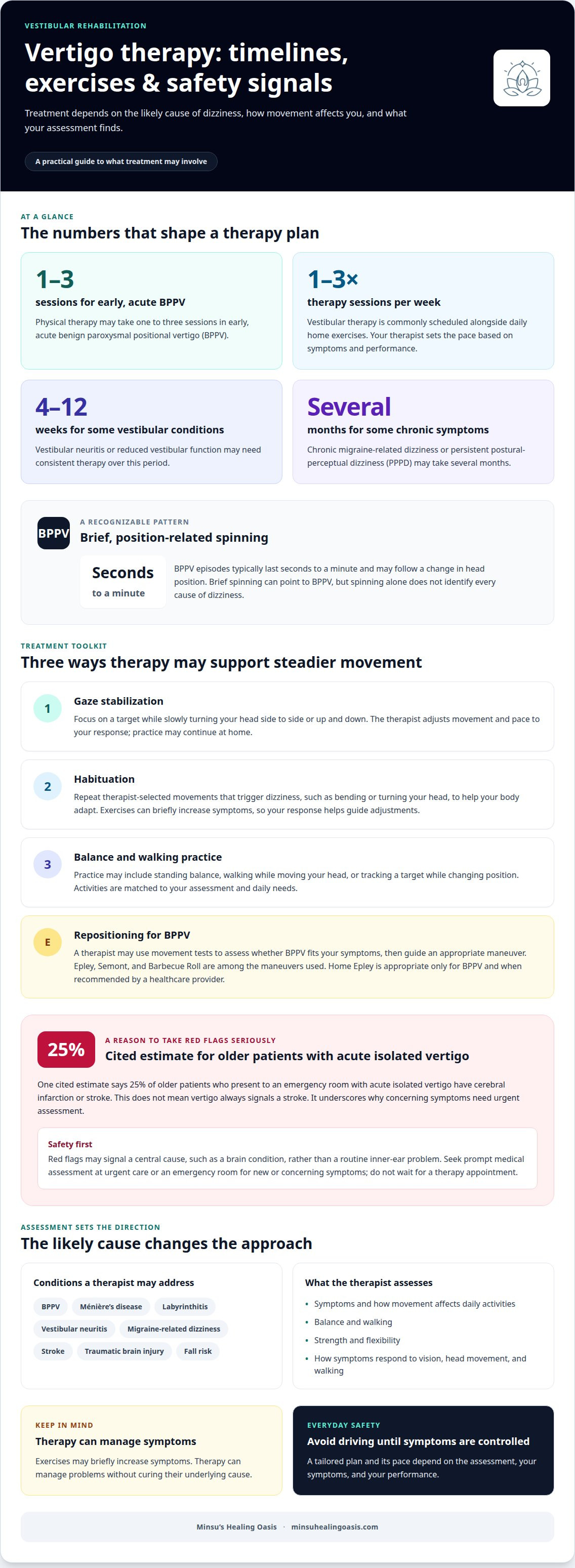
Vestibular rehabilitation tailors exercises and movement-based treatment to dizziness symptoms, balance, and how movement affects daily activities. The right approach depends on the likely cause.
Conditions Treated With Vestibular Therapy
Vestibular therapy uses tailored exercises to address dizziness and balance problems. A physical therapist may use it for benign paroxysmal positional vertigo (BPPV), Ménière’s disease, labyrinthitis, vestibular neuritis, migraine-related dizziness, stroke, traumatic brain injury, or fall risk. Identifying the likely cause matters: brief spinning during head movement may call for different treatment than persistent unsteadiness or nausea.
Treatment Duration and Recovery Outcomes
Physical therapy for vertigo may take one to three sessions for early, acute BPPV. Vestibular therapy is often scheduled one to three times per week alongside daily home exercises. Vestibular neuritis or reduced vestibular function may need four to twelve weeks of consistent therapy; chronic migraine-related dizziness or PPPD may take several months. Exercises can briefly increase symptoms, and therapy can manage problems without curing their underlying cause. Avoid driving until symptoms are controlled.
Epley Maneuver for BPPV
The Epley maneuver uses guided changes in head and body position to move displaced inner-ear crystals in BPPV. A therapist first assesses whether BPPV fits your symptoms, often using specific movement tests, then guides the appropriate repositioning maneuver. Epley, Semont, and Barbecue Roll are among the maneuvers used. Home Epley treatment is appropriate only for BPPV and when recommended by a healthcare provider; it does not treat vertigo from other conditions.
Finding a Vestibular Physical Therapist
A vestibular physical therapist assesses dizziness alongside balance, walking, strength, and flexibility, then tailors treatment to the findings. Insurance coverage depends on the plan and benefits; treatment cost depends on the case and is provided after a quote request. Referral requirements vary by state, insurance, and condition, so a referral may be needed before therapy begins. A focused assessment helps connect treatment to your symptoms and daily movement.
What Is Vestibular Rehabilitation Therapy?
Vestibular rehabilitation therapy uses targeted exercises to help manage dizziness and balance problems. A therapist selects activities based on how your symptoms respond to vision, head movement, and walking.
Gaze Stabilization Exercises
Gaze stabilization exercises train you to keep your vision steady while your head moves. A physical therapist may ask you to focus on a target and slowly turn your head side to side or up and down. The therapist adjusts the movement and pace to your response, then guides you in practicing at home. This work can help stabilize vision during everyday actions, such as looking toward a shelf or turning to speak with someone.
Habituation Exercises
Habituation exercises use repeated, therapist-selected movements to help your body adapt to motions that trigger dizziness. A provider may identify specific triggers, such as bending or turning your head, then guide a measured practice plan. Some exercises can briefly increase symptoms; the therapist uses your response to adjust the program. For benign paroxysmal positional vertigo, or BPPV, treatment may also involve a repositioning maneuver rather than habituation alone.
Balance and Walking Exercises
Balance and walking exercises challenge the systems that help you stay oriented: the inner ear, vision, and sensors in muscles and joints. A therapist may guide standing balance practice, walking while moving your head, or tracking a target while changing position. Activities are matched to your assessment and daily needs, such as feeling unsteady while walking through a busy space.
Vestibular therapy is commonly scheduled one to three sessions per week, alongside daily home exercises. Your therapist sets the pace and frequency according to your symptoms and performance. Consistent practice can support balance, vision stability, and strength, and lower fall risk. Changes in your symptoms help guide adjustments.
What Are Red Flag Symptoms With Dizziness?
Vertigo can feel like spinning, tilting, or movement when you’re still. Depending on the cause, symptoms may last hours or days. Brief, position-related vertigo often points to benign paroxysmal positional vertigo, or BPPV. Its episodes typically last seconds to a minute and may follow a change in head position. Recognizing this pattern can help distinguish it from dizziness that needs urgent attention.
BPPV involves a mechanical change inside the inner ear. Calcium carbonate crystals, called otoconia, normally sit in the utricle. When they move into a semicircular canal, they can create a false sense of movement. Turning or repositioning your head can then trigger positional vertigo. These crystals help explain BPPV symptoms, but they don’t explain every cause of dizziness. Vestibular conditions and brain-related problems can also cause vertigo.
Pay attention to symptoms that may signal a central cause, such as a brain condition, rather than a routine inner-ear problem. Red flags with dizziness call for prompt medical assessment at urgent care or an emergency room. Don’t assume new or concerning symptoms are BPPV based on spinning alone. A physical therapist’s maneuver is intended for BPPV, not vertigo from other causes, so identifying the likely cause matters before treatment.
Stroke is one reason not to dismiss acute vertigo. One cited estimate says 25% of older patients who present to an emergency room with acute isolated vertigo have cerebral infarction or stroke. That figure does not mean vertigo always signals a stroke, but it underscores why red flags deserve attention. If dizziness appears with symptoms that raise concern for a brain cause, seek urgent evaluation rather than waiting for a therapy appointment.
Once urgent causes are addressed, a clinician can assess whether symptoms fit BPPV or another condition. Brief spinning after head movement may guide the evaluation, while persistent dizziness may point elsewhere. This distinction helps determine appropriate treatment and whether to consider vestibular rehabilitation.
First physical therapy appointment
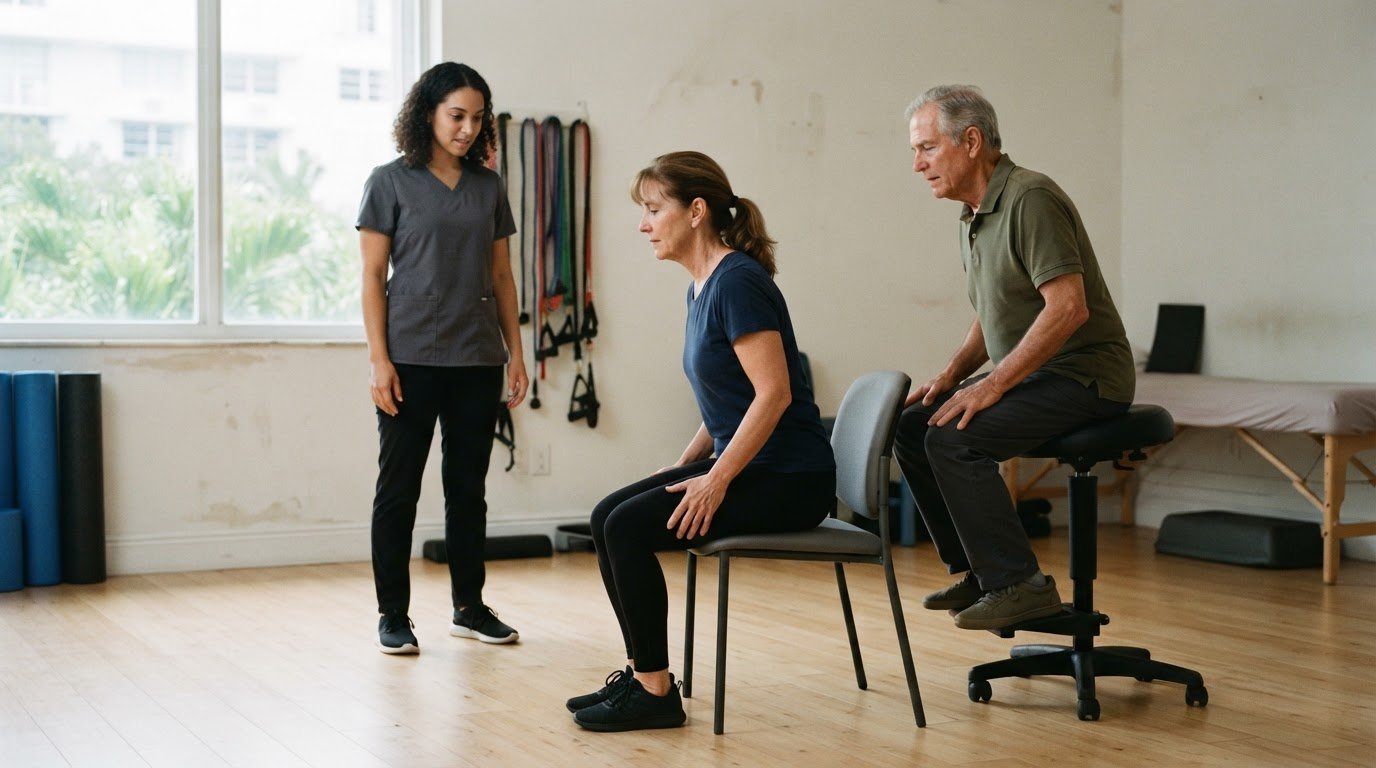
Your first vestibular therapy visit typically lasts about an hour. The therapist begins by asking about your dizziness and how it affects daily movement. Describe what spinning feels like, which motions bring it on, and how it affects walking or balance. Arriving 15 minutes early allows time for any appointment paperwork before the assessment begins.
Next, the therapist assesses balance, walking, strength, flexibility, and vestibular responses. The specific tests depend on your symptoms and the suspected cause. If benign paroxysmal positional vertigo (BPPV) is possible, the therapist may use the Dix-Hallpike test or supine roll test. During the Dix-Hallpike, the therapist guides your head and body into a position that may bring on symptoms. Observed involuntary eye movements can help identify the affected inner-ear canal.
These movements may briefly trigger dizziness or spinning, giving the therapist useful information. Tell the therapist how the motion feels and when symptoms begin. The assessment helps distinguish a positional pattern from other balance concerns and build a clearer picture of what may be causing your symptoms. The therapist selects and interprets specific movement tests; they do not diagnose on their own.
After the assessment, the therapist explains the findings and creates an individualized treatment plan. Your first visit may include guided exercises or a maneuver if the assessment points to BPPV. The plan can also address balance, walking, and other functional goals identified during testing. Ask how each activity relates to your symptoms and what response the therapist expects. This conversation helps you understand the next step and how progress will be evaluated.
The appointment is an assessment and a starting point, not a promise of instant relief. Treatment follows the findings: the therapist uses your symptom pattern, movement responses, and balance evaluation to shape care. If the tests do not fit BPPV, the plan can focus on other findings instead.
Minsu’s Healing Oasis
Minsu’s Healing Oasis offers Physical and Manual Therapies as supportive care when dizziness affects movement, balance, or daily routines. If you’re considering care after learning about vestibular rehabilitation, these therapies provide movement-focused support shaped around your needs. The clinic’s integrative approach also brings together Mind-Body Therapies and Energy Healing and Alternative Therapies, with care focused on the whole person.
Bring questions about your symptoms, daily activities, and what you hope to regain. A thoughtful conversation can help clarify whether Physical and Manual Therapies are a suitable next step for your situation. For urgent dizziness symptoms, seek prompt medical attention rather than waiting for a therapy appointment.
Contact Minsu’s Healing Oasis to discuss your care needs.
Take a Steady Next Step
Choosing physical therapy for vertigo can be a meaningful step toward moving with greater confidence, but care begins with understanding what support you need. Consider which daily activities you hope to approach more comfortably, such as turning your head, walking through a busy space, or returning to familiar routines. Sharing those priorities can shape a conversation about care that feels relevant to your life.
Dizziness can have different causes, so a professional assessment can help determine whether therapy is an appropriate next step for you. If symptoms feel urgent or concerning, seek medical attention rather than waiting for a routine appointment. You deserve care that takes your experience seriously and gives you room to ask questions, understand your options, and choose a path at a manageable pace.
For a supportive conversation about your needs, contact Minsu’s Healing Oasis. Take the next step gently, with room for clarity, confidence, and renewed possibility.
Frequently Asked Questions
Are there any risks?
Some vestibular rehabilitation exercises may temporarily make dizziness more noticeable. For example, turning your head while focusing on a target may briefly make symptoms more noticeable. The therapist uses your response to adjust the exercise and pace. Share how you feel during practice so the treatment can be adapted to your symptoms and balance.
Can BPPV come back?
Yes, benign paroxysmal positional vertigo (BPPV) can return, even after symptoms improve. A renewed spinning sensation when rolling over or changing head position may resemble an earlier episode, but dizziness can have other causes too. If symptoms recur, an assessment can help determine whether BPPV is responsible and whether a repositioning maneuver is appropriate. Don’t assume every later episode has the same cause.
How can a physical therapist help dizziness?
A physical therapist can assess how dizziness relates to head movement, vision, balance, and walking, then match treatment to the findings. For example, difficulty keeping your vision steady while turning your head may lead to gaze-stabilization practice. Trouble walking while looking around may call for guided walking exercises. The assessment helps determine which activities fit your symptoms and daily goals.
How long are the sessions?
Most vestibular therapy sessions last 45 to 60 minutes. During that time, your therapist may review symptoms, guide exercises, and observe how your balance or vision responds to movement. The session’s focus can vary: one visit may emphasize walking with head turns, while another may involve gaze exercises or a repositioning maneuver. The therapist uses your response to shape the visit.
How long will I need this treatment?
The length of treatment depends on the cause of dizziness and how symptoms respond. Some people with BPPV improve after one or two sessions, while vestibular neuritis or reduced vestibular function may call for four to twelve weeks of consistent therapy. Chronic migraine-associated dizziness or PPPD can involve several months of graded rehabilitation. Progress and daily exercise practice help guide the plan.
What are common causes of dizziness?
Common causes include BPPV, Ménière’s disease, labyrinthitis, vestibular neuritis, and migraine-associated dizziness. Dizziness can also occur after stroke or traumatic brain injury, and balance concerns may increase fall risk. BPPV is a common cause of brief, position-related spinning, but similar sensations don’t establish the cause by themselves. The pattern, triggers, and other symptoms help guide assessment.


Comments