




Pediatric Physical Therapy Services for Children
Every child has different movement needs, so care should reflect the child’s strengths, challenges, and goals. A pediatric physical therapy screening can help identify these needs and guide an individualized program. Services, insurance coverage, and adaptive equipment should all be considered in the context of the child’s everyday activities.
It’s natural to want clear answers about what may help your child, how therapy works, and what support could make daily activities easier. Understanding the process can help you feel more confident about the next steps.
This guide explains what screening and individualized programs involve, which needs pediatric physical therapy may address, and how insurance coverage and adaptive equipment can fit into care. You’ll gain a clearer view of the options and the questions to discuss for your family.
Table of Contents
Insurance coverage
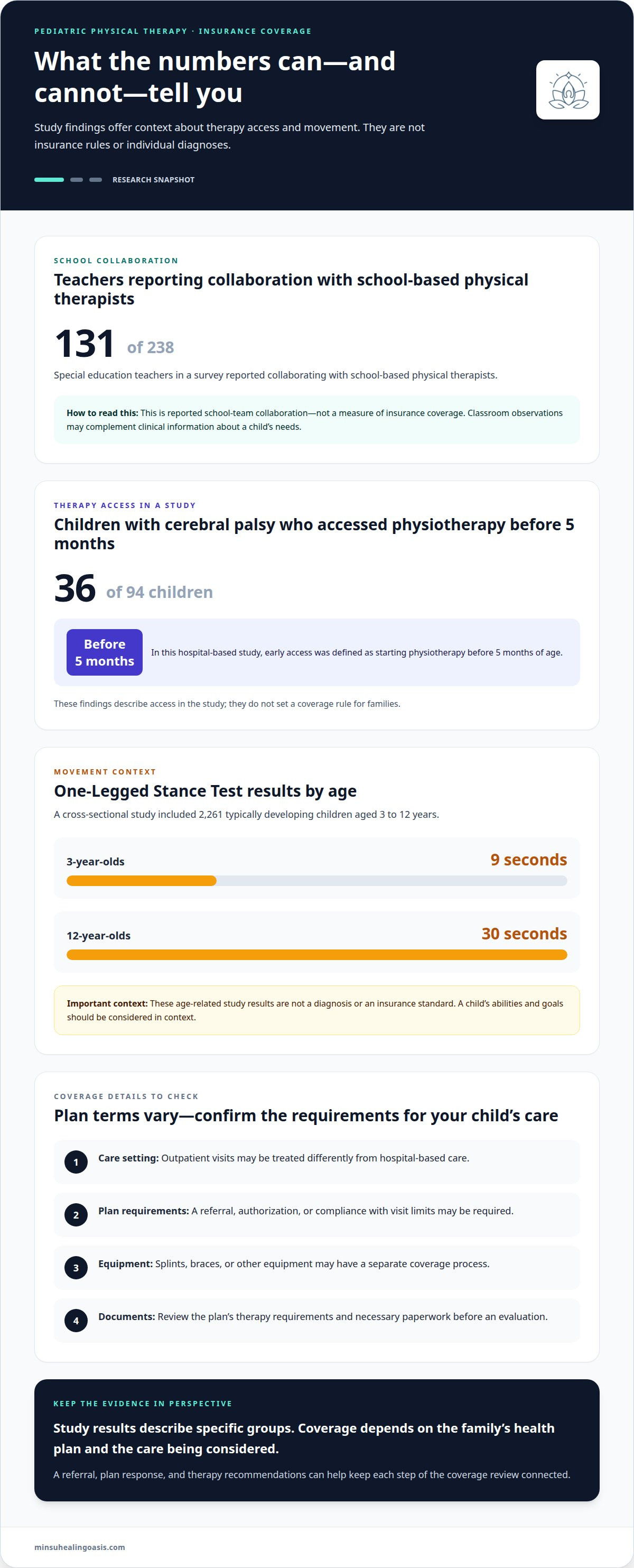
Coverage for a child’s therapy depends on the family’s health plan and the care being considered. Plans may treat outpatient visits differently from hospital-based care and may require a referral, authorization, or compliance with visit limits. Before an evaluation, review the plan’s therapy requirements, necessary documents, and whether equipment has a separate coverage process. These details affect what families can plan for, because insurance terms vary by plan.
A referral can connect a child’s movement needs with a clinical care pathway. A pediatrician or hospital team may describe a concern, such as difficulty with mobility, and explain what information to include. For a child with disabilities, an evaluation can clarify functional needs and support an insurance review. Keep the referral, plan response, and therapy recommendations together so each step builds on the last.
School-based support can also relate to a child’s participation and independence. In a survey of special education teachers about collaboration with school-based physical therapists, 131 of 238 teachers reported collaborating, according to The survey authors. This finding reflects reported collaboration, not insurance coverage, but it shows how school and therapy teams may share perspectives about a child’s needs. For example, a teacher’s observations about classroom movement can complement clinical information.
Timing and evaluation context matter, too. In a hospital-based study, 36 of 94 children with cerebral palsy accessed physiotherapy before 5 months of age, according to The study authors. In that study, early access to physiotherapy was defined as starting before 5 months of age, according to The study authors. These findings describe access in the study, not a coverage rule for US families.
Insurance decisions should reflect a child’s abilities and goals, not an isolated test result. A cross-sectional study of standing balance included 2,261 typically developing children aged 3 to 12 years, according to The study authors. In a study of typically developing children, the mean One-Legged Stance Test result was 9 seconds for 3-year-olds and 30 seconds for 12-year-olds, according to The study authors. These age-related results are context, not a diagnosis or insurance standard.
To find a qualified pediatric physical therapist, ask your child’s pediatrician or hospital team for a referral to someone experienced in children’s movement needs. Share the insurance plan’s referral requirements and your child’s mobility goals as you arrange care.
Screening and individualized therapy programs
A movement screening can identify a child’s strengths, challenges, and everyday goals. The findings can inform an evaluation and a plan tailored to the child and family.
Signs a Child May Benefit
Notice whether movement makes everyday activities difficult, such as walking, changing positions, or joining play. Avoiding stairs, struggling with balance, or moving uncomfortably may be reasons to discuss an evaluation. These signs don’t establish a disorder on their own. They can help you describe your concerns and decide what to raise with a pediatric clinician.
Evaluation and Treatment Sessions
During an evaluation, the physical therapist observes movement, asks about the child’s routines, and considers the family’s goals. The therapist uses clinical reasoning and movement expertise to evaluate, examine, diagnose, and plan interventions. A session may involve activities tied to a practical goal, such as practicing a transition from sitting to standing. The therapist observes the child’s response and adjusts the plan as needed.
Individualized Multidisciplinary Care Plans
A child may need support in several areas. For example, mobility goals for a child with spina bifida may be considered alongside input from other clinicians. Families can also raise speech or feeding concerns with relevant care-team members. Each professional contributes within their role, while a coordinated plan connects priorities and helps caregivers understand how different supports fit together.
Family-Centered Individualized Care
Useful goals reflect the child’s routines, not only clinic activities. A family might prioritize more independence during play or easier movement at home. Caregivers can describe which activities feel difficult and what progress would matter in daily life. The therapist can use those examples to shape practice, discuss insurance documentation, and revise goals as the child’s needs change. Explore individualized support for children as one possible next step.
Pediatric physical therapy services
Children’s therapy services can support movement, function, and goals that matter in daily life. The approach depends on each child’s needs and care setting.
Pediatric Rehabilitation Services
Pediatric physical therapy supports movement skills such as balance, strength, and mobility. Occupational therapy focuses on daily activities, such as dressing or using the hands during play. A multidisciplinary plan can coordinate these distinct goals. For example, one therapist may work with a child on walking while another focuses on managing a backpack.
Conditions Treated
Pediatric physical therapy may address movement challenges associated with a diagnosis, injury, or developmental concern. For example, a child with cerebral palsy may work on balance or moving between positions. An evaluation links the child’s abilities to specific goals rather than focusing on a diagnosis alone. Families can describe activities that feel difficult, such as getting up from the floor or joining a playground game.
Therapy Approaches and Exercises
Activities are chosen to support goals identified during evaluation. A therapist might use guided movement, balance practice, or strengthening activities, adapting each task to the child’s abilities. Play can make practice purposeful, such as stepping over low obstacles to rehearse controlled movement. The therapist adjusts activities in response to the child. Tell the therapist if an exercise causes pain or unusual discomfort.
Telehealth can provide a way to discuss goals and daily routines remotely. For example, a caregiver might show how a child moves between a chair and the floor during a virtual session. The therapist can observe, explain relevant movement strategies, and discuss next steps. Remote and in-person sessions work differently, so the approach depends on the child’s needs and the service available.
Splinting, bracing, and adaptive equipment
Support devices and movement practice may be part of a child’s rehabilitation. Their purpose is to help with daily activities, with choices guided by clinical assessment and individual goals.
Splinting and Bracing
A splint or brace can support or position a body part during selected activities. For a child with cerebral palsy, a clinician may consider how a device relates to comfort, movement, and a specific functional goal. The decision should reflect the child’s assessment, not just a diagnosis. Fit and tolerance matter: observe whether the child can comfortably use the device during the activity it is intended to support.
Caregivers can share practical observations with the rehabilitation team. For example, note whether a brace affects getting dressed, sitting, or joining play. These details help the team understand how the intervention fits into real routines. If the device causes discomfort or interferes with an activity, report it so the team can clinically reconsider its use and fit.
Gait Training and Adaptive Equipment
Gait training focuses on walking skills such as balance, stepping, and moving across different surfaces. A therapist may practice a meaningful task with the child and consider whether adaptive equipment could support participation. The right choice depends on the child’s movement, environment, and goal, such as moving more confidently between rooms or joining a playground activity.
Equipment is most useful when it serves a clear purpose in the child’s day. The rehabilitation team can consider how the child moves with and without support, and whether the equipment helps with function and achieving a practical goal. Families can describe home, school, and community routines to guide this discussion. For individualized movement support, connect with Minsu’s Healing Oasis about physiotherapy.
Minsu’s Healing Oasis
Minsu’s Healing Oasis offers physiotherapy and manual therapy for families exploring support with movement and physical wellbeing. If your child’s needs call for individualized attention, these services can provide a setting to discuss goals, daily activities, and appropriate next steps. Myofascial release, the Quantum Healing Technique, and other energy healing and alternative therapies are also available as part of the center’s offerings. Each approach serves a different purpose, so the conversation can focus on the concerns you bring and the kind of support you’re seeking. For urgent medical concerns, contact your child’s medical team. If you’d like to discuss support for your family, contact Minsu’s Healing Oasis.
Take the Next Step With Confidence
Your child’s progress involves more than exercises or equipment. It grows through attentive care, meaningful goals, and the steady support of the people who know your child best. As you consider pediatric physical therapy, focus on what could make daily life easier and more fulfilling for your child. A thoughtful conversation can help clarify your priorities and the kind of support that may suit your family.
Minsu’s Healing Oasis offers a holistic setting for families exploring physical wellbeing and supportive care. You can share the movement concerns or everyday activities on your mind and discuss a possible next step without pressure or promises. The goal is to make space for your questions and help you feel more grounded as you consider your child’s needs.
If you’re ready to begin that conversation, contact Minsu’s Healing Oasis. Each family’s path is personal, and a caring next step can start with a simple conversation.
Frequently Asked Questions
How do you get a referral for pediatric physical therapy in the United States?
Ask your child’s pediatrician or treating clinician to discuss a referral and document the movement concern. Share relevant records, such as a diagnosis summary or previous therapy notes, so the referral reflects your child’s needs. Referral requirements vary by insurance plan and care setting. Before scheduling, find out whether the plan requires a referral or authorization and what information the clinic needs to process it.
How much does pediatric physical therapy cost, and does insurance cover it?
There’s no single cost or coverage rule for every family. The amount depends on factors such as the care setting, session format, and plan benefits; Minsu’s Healing Oasis gives pricing after a quote request. Insurance coverage depends on the specific plan and its terms for therapy. Review your benefits for referral or authorization requirements, cost-sharing, and any limits that apply to the service.
How long does pediatric physical therapy typically last, and how is progress measured?
Therapy duration depends on the child’s goals, response to treatment, and support needs in daily activities. Progress can be tracked against practical goals, such as moving between positions or joining a preferred activity, alongside the therapist’s observations. Families’ reports of changes at home also provide useful context. A core patient-reported outcome set for pediatric physical therapy includes nine outcomes.
What are the risks or side effects of pediatric physical therapy?
An exercise may cause pain or unusual discomfort, and a splint or brace may feel uncomfortable or interfere with an activity. Tell the therapist or rehabilitation team so they can reconsider the activity, device use, or fit.


Comments