




Myofascial Release for Trauma: Benefits, Risks and PTSD
Trauma can affect the body as well as the mind. Myofascial release for trauma may help ease fascial tightness, pain, and movement restrictions, but it is supportive hands-on care, not a stand-alone treatment for PTSD. Emotional trauma and physical injury can both affect the body, and each person may respond differently to touch.
If you’re curious about this approach but cautious about what a session might bring up, that’s understandable. Gentle pressure and slow stretching may feel soothing, uncomfortable, or emotionally intense. Your sense of safety and control matters throughout.
This article explains how myofascial release may relate to emotional trauma, PTSD, and head or body injuries; when it may be unsuitable; and what responses or soreness you might notice during or after treatment. You’ll also learn how it can fit alongside trauma-focused care, so you can consider the approach with clarity and care.
Table of Contents
Can Myofascial Release Help With EMOTIONAL TRAUMA?
Trauma can be physical or emotional, and either may affect the body. Falls, car accidents, and whiplash are examples associated with fascial tightness.
Fascial Restrictions and Trauma
Fascial restrictions are areas where connective tissue and surrounding muscles feel tight or move less freely. Myofascial release addresses them with sustained pressure and slow stretching rather than forceful manipulation. Cleveland Clinic describes gentle, constant pressure on stiff, tight fascial areas. Trauma is one possible contributor; prolonged stress may also lead to a low-grade bracing pattern that lasts months or years. This matters when an old injury or persistent guarding makes comfortable movement difficult.
Fascia, Tension, and the Mind-Body Connection
Fascia surrounds muscles, nerves, vessels, and bones, linking tissues throughout the body. Ongoing tension can influence how a person moves and experiences discomfort, while pain itself may heighten anxiety and protective bracing. The Institute for Chronic Pain reports that up to 90% of women with fibromyalgia describe significant trauma in their history. That association doesn’t prove trauma caused an individual’s pain, but it highlights why physical symptoms deserve compassionate, whole-person attention.
Myofascial release differs from trauma-focused psychotherapy. Hands-on care works with tissue tension and movement, while psychotherapy addresses trauma-related thoughts, emotions, and memories. Body-based approaches such as Somatic Experiencing and Sensorimotor Psychotherapy also focus on bodily awareness, and psychotherapy may complement somatic care.
Fascia and the Stress Response
The stress response can involve muscle guarding, shallow breathing, and less ease of movement. If bracing continues, fascial tissues may feel less flexible and more restricted; Cleveland Clinic notes that fascia can become tighter and more rigid after trauma. A gentle technique may address this physical pattern, but it does not retrieve or release a specific memory. The practical question is whether the pressure feels tolerable and movement becomes easier.
Uses and Evidence for Trauma-Related Symptoms
Myofascial release is a manual therapy that targets fascia and muscles. For trauma-related symptoms, it may address pain, tension, and restricted movement. The article’s evidence supports a possible role in chronic pain, anxiety, and depression, but does not establish it as a PTSD treatment. For PTSD, it is best understood as supportive bodywork alongside trauma-focused care, not a replacement. This distinction helps set realistic expectations.
What evidence supports its use? The cited facts describe how trauma and fascial restriction may relate and how gentle pressure is applied. They do not provide a clinical trial result proving effectiveness for PTSD. The Institute for Chronic Pain also reports that people with chronic pain carry at least double the trauma exposure of the general population. An association can inform care, but does not prove that one treatment will resolve trauma.
In the United States, cost depends on session length, location, and clinician. The price is given after a quote request. Insurance coverage varies by plan and billing, so check your own policy terms.
Contraindications and treatment suitability
Suitability depends on the condition being treated, the tissues involved, and the person’s health history. For example, care for back pain calls for different considerations than treatment near a healing fracture.
Myofascial release may address pain and mobility concerns associated with back pain, neck pain, and fibromyalgia. It may also be used for repetitive strain injuries and muscular imbalances linked to overuse or faulty movement patterns. Posture and movement can help explain where discomfort appears, but symptoms alone do not identify the cause.
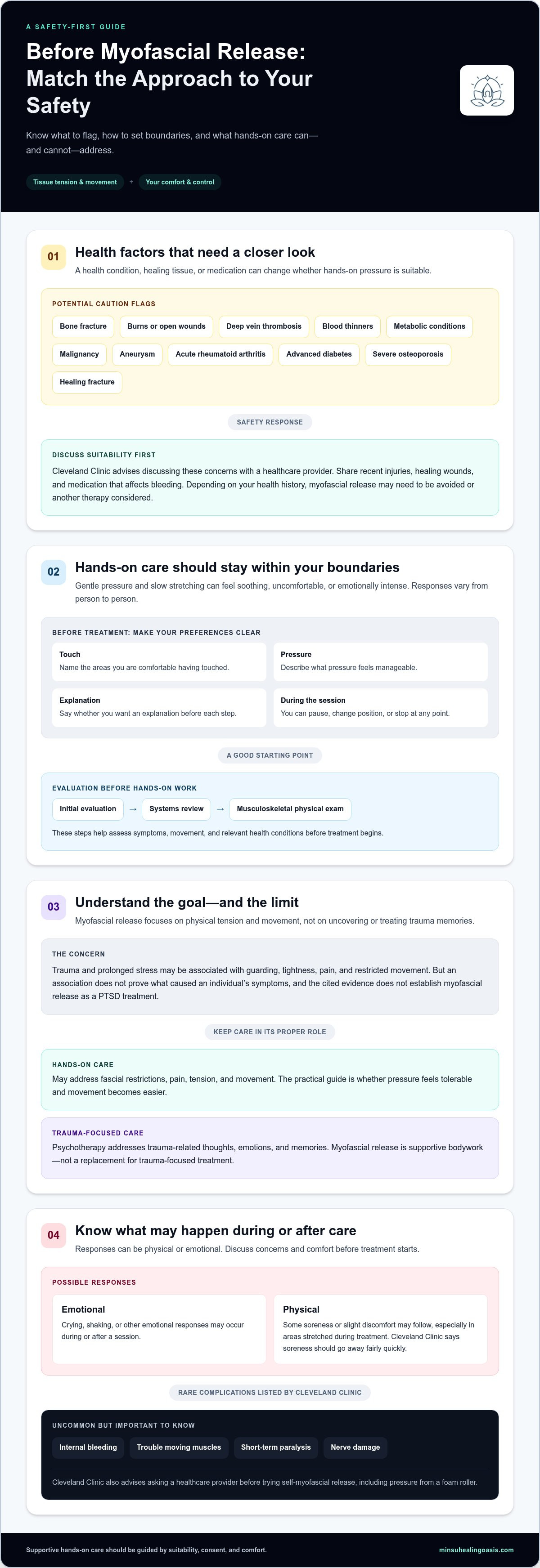
A first session typically includes an initial evaluation, systems review, and musculoskeletal physical exam. These steps help assess symptoms, movement, and relevant health conditions before hands-on treatment begins. Share details such as a recent injury, a healing wound, or medication that affects bleeding. Clear communication helps shape the pressure, position, and areas addressed during therapy.
How can patients set boundaries and give consent during hands-on myofascial release? Before treatment, say which areas you’re comfortable having touched, what pressure feels manageable, and whether you prefer an explanation before each step. You can ask to pause, change position, or stop at any point during a session.
Some conditions call for extra caution or a different approach. Cleveland Clinic advises people with bone fractures, burns, open wounds, deep vein thrombosis, conditions requiring blood thinners, or metabolic conditions to consult a healthcare provider about avoiding myofascial release or trying another therapy. Treatment may also be unsuitable for malignancy, aneurysm, acute rheumatoid arthritis, advanced diabetes, severe osteoporosis, or healing fractures.
Rare complications: Cleveland Clinic lists internal bleeding, trouble moving muscles, short-term paralysis, and nerve damage as possible complications.
Self-treatment: Cleveland Clinic advises asking a healthcare provider before trying self-myofascial release, including pressure from a foam roller.
Aftercare and treatment frequency depend on the reason for care and symptom severity. Cleveland Clinic says a provider may recommend sessions every one to three days, continuing for a few weeks or a few months. Gentle stretching and hydration can support comfort between sessions. Stop an activity that increases pain rather than pushing through it.
If you’re considering hands-on care for pain or restricted movement, myofascial release therapy can be part of a thoughtfully paced treatment approach.
Emotional responses during myofascial release
During or after hands-on work, some people cry, shake, groan, yell, or scream. Knowing these responses can occur may help you recognize distress and speak up rather than feel pressured to continue.
Emotional Responses During and After Treatment
Emotional responses are feelings or physical reactions that arise during or after tissue work. A person might notice tears during gentle pressure on a tight shoulder or feel unsettled later while remembering a difficult event. These reactions are not required for treatment to be useful, and they do not prove that a specific memory has been released. Naming what you feel can help guide what happens next.
Before a session, consider what helps you feel grounded, such as keeping your eyes open, choosing a secure-feeling position, or agreeing on a pause signal. If a strong response begins, ask for the pressure to stop, take a break, or end the session. Afterward, a quiet moment, water, and noticing familiar surroundings can help you orient before leaving.
Fight, Flight, and Freeze Responses
Fight, flight, and freeze describe protective responses to perceived threat, and touch can feel activating for someone with trauma. For example, a hand approaching the abdomen might prompt muscle bracing, an urge to move away, or a feeling of becoming still. These reactions are signals to slow down, not challenges to overcome with stronger pressure.
A simple boundary plan can make a session more predictable: identify areas you don’t want touched, choose whether you want each step explained, and agree that “stop” means hands come off immediately. You can also request a seated position or keep a blanket over areas not being treated. These choices preserve your control while your body responds.
Trauma Memories, Distress, and Dissociation
Can myofascial release trigger trauma memories, emotional distress, or dissociation? A session can coincide with distress or memories, and a person may feel detached, foggy, or less aware of their surroundings. These experiences are not inevitable, and tissue sensations cannot establish what caused a memory or emotion.
If you notice a trigger, tell the practitioner, stop the pressure, and orient to the present: name the room, notice your feet on the floor, and look at a familiar object. Don’t push through escalating distress to finish an area. If feeling detached continues after the session or disrupts daily life, discuss it with a mental health professional who understands trauma.
Chronic pain can make body sensations harder to interpret, so distinguish pressure-related discomfort from emotional overwhelm. For instance, you might say, “My shoulder feels tender, and I’m becoming anxious,” rather than waiting until you feel unable to speak. Clear words help the practitioner adjust or stop, and your consent can change at any point.
Possible discomfort and post-treatment soreness
After myofascial release therapy, a stretched area can feel tender, and movement may briefly feel different. Cleveland Clinic says soreness may occur where tissues were stretched and should go away fairly quickly. Noting the location, intensity, and duration of symptoms can help distinguish temporary soreness from discomfort that needs further attention.
Understanding soreness and changes in motion
Some people notice slight discomfort during treatment or residual muscle soreness afterward. The cause is not always clear: post-treatment soreness is thought to relate to postural or alignment changes, or to the techniques themselves. For example, a shoulder that moves more freely may feel tender after focused work, while another person may notice stiffness without a change in motion.
Keep the next day simple if an area feels sensitive. Compare it with your usual baseline, and notice whether walking, reaching, or turning becomes easier or harder. Gentle movement can show how your body responds, but stop an activity that increases pain. Cleveland Clinic says stretched-area soreness should resolve fairly quickly; worsening or persistent symptoms warrant medical attention.
During a session, tell the practitioner if pressure feels sharp, uncomfortable, or emotionally overwhelming. Ask them to reduce the pressure, change position, or stop. A specific example helps: “The front of my hip feels more tender than comfortable.” Clear feedback lets the session respond to your experience instead of asking you to tolerate increasing discomfort.
Emotional responses and body-held trauma
Physical tenderness and emotional responses are different experiences, though they can occur together. A person might feel muscle soreness near the shoulder and also notice anxiety or sadness during a session. Some people report crying, shaking, groaning, yelling, or screaming during or after bodywork. These reactions deserve attention, but they do not prove that tissue contains a memory or that trauma has been resolved.
“Body-held trauma” is often used to describe physical patterns associated with distress, such as persistent bracing or tension. A guarded posture, discomfort with certain touch, or tightness during stress can be worth noticing, especially when these symptoms affect daily movement. None of these signs alone identifies trauma; pain and tension can have many causes.
Consider recording one concrete observation after treatment: where soreness appeared, what movement changed, or whether an emotional response followed a particular touch. Share that information with a qualified healthcare professional if symptoms continue or interfere with daily life. This record can help distinguish a temporary response from a recurring pattern and guide decisions about future care.
Myofascial release for PTSD and head or body injuries
PTSD and physical injury can overlap, especially when chronic pain remains after an accident or head injury. The U.S. Department of Veterans Affairs estimates that 15 to 35% of chronic pain patients also meet criteria for PTSD. That connection matters because movement, sleep, and ordinary activities may be affected by physical discomfort and mental distress together. Myofascial release is hands-on care for tissue mobility and pain, not a treatment for PTSD itself.
Where hands-on care may fit
Gentle myofascial techniques may help improve fascial mobility, reduce pain, and increase range of motion. For example, someone recovering from a body injury may work toward reaching overhead or turning more comfortably. Alongside traditional physical therapy, this approach may support a gradual return to daily and recreational activities. The focus is practical function, such as dressing, walking, or returning to a chosen hobby, rather than pushing through pain.
Head injuries require particular care because symptoms can affect more than muscles or movement. A person with a past concussion, for instance, may experience sensitivity to touch alongside limited neck motion. Hands-on work should be shaped around current symptoms and the person’s comfort, with gentle pressure adjusted in response. The aim is not to uncover a memory or replace medical care, but to address physical restrictions within a broader recovery plan.
Combining physical and mental health support
For people living with PTSD, touch and body positioning can feel vulnerable, even when a technique is gentle. A trauma-aware practice makes room for choice: agree on the area being treated, explain each movement beforehand, and pause if distress rises. Myofascial work can sit alongside trauma therapy, which addresses psychological symptoms through a different path. This distinction connects physical rehabilitation and mental health care without confusing their roles.
Many men and women returning from the current conflict experience symptoms of body or head trauma. Their needs can differ: one person may focus on shoulder movement after an injury, while another works on neck comfort during daily tasks. Progress is best understood through specific functional changes, such as easier turning or more comfortable walking, not through an emotional reaction during massage. A calm, collaborative pace makes those goals easier to discuss.
If you’re considering gentle bodywork as part of recovery, explore myofascial release support as one possible part of a broader healing practice.
Minsu’s Healing Oasis: Physiotherapy and Manual Therapy
Minsu’s Healing Oasis offers physiotherapy and manual therapy, including myofascial release, for people seeking support with pain, restricted movement, or physical tension. This hands-on approach may be relevant when trauma-related symptoms affect comfort or everyday activity, while PTSD itself calls for appropriate mental health care. Sessions can focus on physical needs at a pace that respects your comfort and boundaries.
For those interested in a broader wellness approach, Minsu’s Healing Oasis offers Energy Healing and Alternative Therapies, including the Quantum Healing Technique. These services can complement a personal wellness routine, but they do not replace medical or mental health treatment.
If you’d like to explore whether this care fits your needs, contact Minsu’s Healing Oasis.
Choose a Next Step That Honors Your Pace
Healing doesn’t need to follow a single path. If you’re considering myofascial release for trauma, let your next step reflect what feels manageable, what support you already have, and what you hope to do more comfortably in daily life. A clear goal, such as moving with less guarding, can help keep care focused on your needs.
Minsu’s Healing Oasis offers Physical and Manual Therapies, including Myofascial release, alongside Energy Healing and Alternative Therapies. These options support a whole-person approach while remaining distinct from mental health treatment. You can share the physical support you’re seeking and consider whether these services align with your priorities.
There’s no need to rush a decision. Give yourself room to notice what feels right, ask for the kind of care that respects your boundaries, and take one step at a time. Explore care options with Minsu’s Healing Oasis when you’re ready to consider your next step.
Frequently Asked Questions
How Is Trauma Stored in the Body?
Trauma isn’t literally stored in fascia like a memory file. Stress and traumatic experiences can be associated with lasting physical responses, such as muscle guarding, tension, or pain. For example, a person may brace their shoulders during stress without noticing. These symptoms can have several causes, so they don’t prove that someone has experienced trauma. A trauma-informed approach attends to both body sensations and a person’s sense of safety.
What is fascia?
Fascia is connective tissue that surrounds and links structures throughout the body, including muscles, nerves, vessels, and bones. Picture a continuous network of layers that supports movement and separates tissues while allowing them to interact. Its relationship with nearby structures helps explain why stiffness or discomfort in one area can influence movement elsewhere. Fascia is one part of the body’s support system, not a single organ or repository for emotions.
What happens during a myofascial release session, and how can patients prepare?
A session uses hands-on pressure and stretching to address areas of stiffness; Cleveland Clinic describes sessions lasting 15 to 50 minutes. A practitioner may work away from the sore spot if discomfort is referred from elsewhere. Before a session, note your main movement concern, relevant injuries, and touch boundaries. A session of myofascial release for trauma should support physical comfort, not replace mental health treatment.
What are the risks and contraindications of myofascial release?
Possible effects include temporary soreness or slight discomfort; Cleveland Clinic also lists rare complications such as internal bleeding, nerve damage, trouble moving muscles, and short-term paralysis. Extra caution is needed with a fracture, burn, open wound, deep vein thrombosis, blood-thinner use, or a metabolic condition. Cleveland Clinic advises discussing suitability with a healthcare provider in these situations. Severe osteoporosis and healing fractures are also reasons to assess treatment carefully.
How can someone find a licensed, trauma-informed myofascial release practitioner in the United States?
Look for a practitioner who explains their professional role, relevant license or credential, and specific training in myofascial techniques. Ask how they adapt touch for trauma histories, invite consent, and respond if distress arises. You can verify a stated license with its issuing body and clarify whether the practitioner’s scope fits your needs. A clear answer about pauses, pressure adjustments, and stopping can help you assess whether the approach feels appropriate.
What qualifications should a trauma-informed myofascial release therapist have?
Look for relevant professional training in hands-on care and specific education in myofascial techniques. Trauma-informed practice should include clear explanations, respect for changing consent, and the ability to pause or stop touch when requested. Ask how the therapist distinguishes physical goals from mental health treatment and responds if a session becomes emotionally difficult. These answers can help you understand their approach without relying on a certification title alone.



Comments